

When researching a move to Mexico, the most common question asked is “How much does it cost to live there?” However, providing a single numerical answer is often more misleading than helpful. Unlike a fixed utility bill or a standardized tax rate in many northern countries, the cost of living in Mexico is highly subjective and depends almost entirely on the lifestyle infrastructure an individual chooses to build. It is not an “apples-to-apples” comparison with your current life; it is a total reimagining of how you interact with the economy.
The economic reality of Mexico is one of “layered markets” that exist simultaneously. There is a market priced for the local working class, a market priced for the burgeoning Mexican middle and upper class, and a market priced for international tourism and high-income foreigners. A newcomer can move between these markets daily, and their ultimate “cost” is a reflection of how often they opt for convenience, imported goods, and English-language services over local alternatives.
Whether you are a retiree seeking a comfortable lifestyle, a family looking for a higher quality of life, or a remote worker taking advantage of geographic arbitrage, the goal of living in Mexico is rarely just about “saving money.” Instead, it is about leveraging the strength of a foreign currency to buy back time and increase your standard of living. In this context, the cost of living is a strategic investment. You are deciding which parts of your life you want to manage personally and which parts of your life you want to outsource to the local service economy. This guide moves beyond surface-level estimates to analyze a multitude of distinct categories that form the backbone of a life in Mexico for everyone.
Geographic Market Tiering
Mexico does not have a single cost of living; it has a series of “economic islands.”
-
- Global demand hubs: Neighborhoods like Roma, Condesa, and Polanco in CDMX, or coastal hubs like Puerto Vallarta or Tulum, have effectively decoupled from the local economy. Prices here are driven by international demand and global remote-work trends.
- Middle tier cities: Cities like Querétaro, Mérida, or Puebla provide modern infrastructure at prices scaled for the Mexican professional class. These locations can potentially offer a higher “value-to-quality” ratio.
- Small towns and pueblos: Moving to smaller, non-tourist towns significantly lowers costs, but often requires a higher degree of Spanish and a willingness to trade convenience for authenticity.
Housing and Rental Dynamics
Housing is determined by your choice of management and setup.
-
- Furnished vs. unfurnished: Furnished units are “turnkey” but expensive. Unfurnished properties are significantly cheaper but may require you to provide your own appliances, including stoves and refrigerators, which are not always standard.
- Direct owner vs. management: Renting directly from an owner (Trato Directo) can save money but requires better Spanish. Platforms like Airbnb or property management companies provide a buffer and English-language support but include substantial service fees.
- The aval and póliza jurídica: Securing a traditional, lower-cost lease often requires a fiador (a property-owning guarantor) or the purchase of a póliza jurídica (legal insurance). This is a structural upfront cost unique to the Mexican market.
Electricity and the CFE Rate Structure
Managed by the Comisión Federal de Electricidad (CFE), electricity is the most volatile utility.
-
- Subsidized tiers: The government heavily subsidizes basic residential usage. If you live in a temperate climate and avoid AC, your bill can remain relatively negligible and consistent.
- The DAC threshold: Exceeding a rolling 12-month consumption limit triggers the Doméstica de Alto Consumo (High Consumption) rate. This removes all subsidies, often causing bills to jump by several hundred percent.
Managed Utilities: Propane Gas
Most of Mexico is not on a centralized natural gas grid. Homes rely primarily on liquid propane (LP) for water heating, cooking, and clothes drying.
-
- Logistics: Residents must coordinate deliveries of gas cylinders and/or to refill staionary tanks. Managing your gas levels and coordinating with delivery trucks is an essential part of household management.
Water Systems: Potability and Storage
Water requires more active management than many foreigners are accustomed to.
-
- The potability gap: Since tap water is typically not drinkable depending on your location and personal preference, households have to potentially consider budgeting for the logistics of garrafón (20-liter jug) delivery.
- Storage maintenance: Most homes use a tinaco (rooftop tank) and a cisterna (underground reserve). These systems require periodic professional cleaning and pump maintenance to ensure consistent pressure.
Connectivity and Redundancy
For those who rely on the internet for communication or work, high-quality connectivity is essential.
-
-
Urban vs. rural: Large cities offer fiber-optic speeds up to 1Gbps. In smaller towns or rural areas, infrastructure may be limited to slower DSL or cable.
-
Satellite solutions: For those in remote “off-grid” areas, Starlink has become a game-changer in Mexico, offering high-speed reliable internet where landlines are unavailable.
- The redundancy strategy: Many people pay for two separate internet providers to ensure they are never offline. This category also includes high-data mobile plans used as a fallback.
-
Public Healthcare
Foreigners with legal residency typically have access to several national healthcare systems.
-
- IMSS: A contribution-based social security system. Residents can enroll for an annual fee that increases with age. It provides coverage typically with minimal out-of-pocket costs, but can involve significant bureaucracy.
- IMSS-Bienestar: The public safety net for those not covered by other systems, providing essential care in public clinics. This was formerly INSABI and which was subsequently preceeded by Seguro Popular.
- State programs: Some states (e.g., Jalisco) have opted to maintain their own independent healthcare programs specifically designed to support underserved populations outside and in addition to the federal system.
Private Healthcare
Most foreigners prioritize the private system for its speed and access to English-speaking professionals.
-
- Domestic insurance: Policies covering you exclusively within Mexico; affordable and providing access to top private hospitals.
- International global policies: Comprehensive plans covering you worldwide, often excluding the U.S. to manage premium costs.
- Self-insurance: Because specialist visits and diagnostic labs are relatively low-cost, many residents pay cash for routine care and use insurance only for catastrophic events.
Domestic Labor and Legal Compliance
The service economy allows for affordable help, but it comes with legal responsibilities.
-
- Household help: Hiring an aseo (housekeeper) or gardener is standard for many residents.
- Labor obligations: Mexican law requires the payment of the Aguinaldo (year-end bonus) and vacation premiums. These are statutory requirements for any domestic employee, regardless of their part-time status.
Groceries: Local vs Imported Choices
Food costs reflect your willingness to adapt to local seasonal cycles.
-
- The mercado economy: Shopping at local markets (tianguis) for fresh produce and meat is where the most significant savings are found.
- The imported markup: Shopping at retailers for specific North American brands involves a high “comfort tax” due to import duties.
Dining Out and Gastronomy
Mexico’s dining scene is a spectrum ranging from street food to world-class gastronomy.
-
- Comida corrida: These small, family-run eateries offer fixed-price, multi-course lunches that provide incredible value.
- High-end gastronomy: Even at the highest end, dining in Mexico’s top restaurants generally remains significantly more affordable than comparable experiences in major global cities.
Transportation
In urban centers, the necessity of a car is often a choice rather than a requirement.
-
- The ride-share advantage: Using apps like Uber or Didi eliminates the overhead of insurance, maintenance, and parking.
- Public infrastructure: Major cities have extensive bus and metro networks that cost only cents per ride.
Inter-City Travel
Traveling between cities in Mexico is often more comfortable by bus than by air.
-
- Executive class: The luxury bus network (Clase Ejecutivo) offers wide, reclining seats and onboard service. It is a cost-effective alternative to domestic flights or the risks of long-distance driving.
- Domestic airlines: Budget carriers like Volaris and VivaAerobús offer very competitive pricing for travel between major hubs.
Vehicle Maintenance and Annual Taxes
For those who choose to own a vehicle, the costs extend beyond gasoline.
-
- Annual obligations: Residents must account for the tenencia (annual registration tax) or refrendo, as well as the verificación (emissions testing) in certain states.
- Labor costs: While parts for imported vehicles may be expensive, the cost of high-quality mechanical labor is generally very affordable.
Home Maintenance and Environmental Factors
The construction materials used in Mexico; concrete, brick, and stone; require specific care.
-
- Seasonal protection: Residents must budget for annual impermeabilización (roof sealing) to protect against heavy rains.
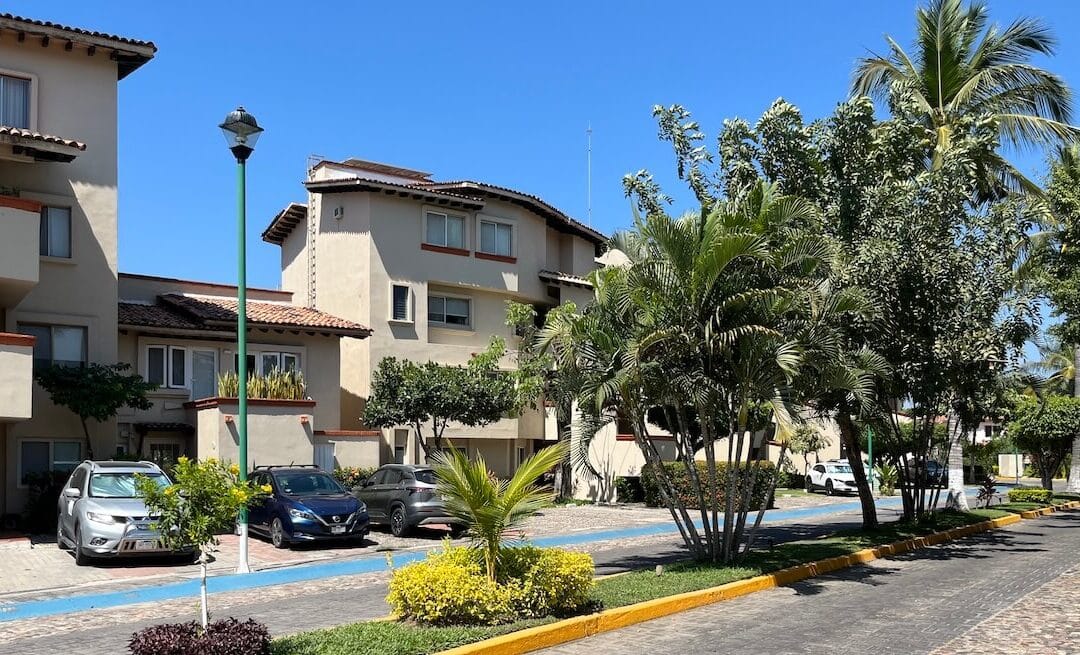
- HOA fees: Gated communities (fraccionamientos) charge monthly fees for security and communal amenities.
Language Integration
Integration is a lifestyle cost that pays dividends in savings.
-
- Instruction: Private Spanish lessons or immersion schools are common expenses during the first years of residency.
- Economic navigation: Being able to interact in Spanish allows you to navigate the local economy without often having to pay the “foreigner premium” quoted to some non-Spanish speakers.
Legal and Residency Administration
Maintaining legal status involves ongoing administrative costs that have been increasing with each passing year.
-
- Government fees: As of January 1, 2026, many immigration fees have doubled, unlike prior years. Residency fees and renewals can represent a fixed administrative cost depending on your status – temporary vs permanent.
- Professional assistance: Many foreigners hire a facilitator to navigate the Instituto Nacional de Migración (INM) bureaucracy, adding a service fee to these base government costs.
Banking and Currency Exchange Costs
Moving money across borders involves “hidden” costs that can erode your budget.
-
- Exchange rate spread: Traditional banks often charge a spread on the exchange rate.
- ATM fees: While Mexican ATMs are efficient, they charge convenience fees, and your home bank may charge additional international transaction fees. Using digital-first banks or specialized transfer services such as Wise is a common strategy to mitigate these costs.
Home Security and Monitoring
While some foreigners live in gated communities, those in independent homes often invest in secondary security layers.
-
- Systems and monitoring: Professional monitoring services from companies typically start at monthly rates geared toward the middle class.
- Structural security: This includes “hard” costs like the installation of electric fences, security cameras, or reinforced doors, which are standard in many neighborhoods.
Pet Ownership and Veterinary Care
Pets are a significant part of the lifestyle, and their care follows the tiered market logic.
-
- Veterinary services: Routine care is remarkably affordable compared to the North, with consultation fees often much lower than in the U.S. or Canada.
- Premium imports: However, specialized pet food and imported medications carry the same import markup as human groceries, and emergency surgeries can still represent a significant out-of-pocket expense.
Water Softening and Purification Infrastructure
-
- Appliance longevity and maintenance: Without a water softener, mineral scale buildup will significantly shorten the lifespan of your water heater, dishwasher, and washing machine. It also clogs showerheads and leaves persistent spotting on glass and tile that can be nearly impossible to remove without specialized professional chemicals, leading to higher recurring cleaning costs.
- The purification transition: Many residents are moving away from garrafón (jug) delivery in favor of “Point of Use” or “Whole Home” reverse osmosis and UV filtration systems. While these require an initial capital investment, they eliminate the logistical hassle of water delivery and provide a more sustainable, on-demand solution for potable water throughout the home.
Climate Control and Energy Efficiency
While the CFE bill is a recurring utility, the infrastructure you use to manage your home’s temperature determines whether you stay below the high-cost DAC threshold.
-
- Solar power: Because of Mexico’s high solar radiation, residential solar has an exceptionally fast ROI. Interconnecting with the CFE grid allows you to “bank” credits during sunny months to offset heavy air conditioning usage in the summer, effectively shielding your budget from the most aggressive CFE rate hikes.
- Inverter technology and sealing: Modern “Inverter” AC units use up to 40% less electricity than older models, which can be the difference between a manageable bill and an astronomical one. Additionally, in higher altitudes where homes lack central heating, budgeting for high-quality window sealing or “minisplit” heat pumps is essential for navigating surprisingly cold winter nights.
Schooling and Education
For families, education is often the second-largest expense after housing. In Mexico, private education is the standard for most foreigners, but the costs extend far beyond the monthly tuition.
-
- Inscription and enrollment: Most private schools (Colegios) charge a “Cuota de Inscripción” (enrollment fee) for new students and an annual “Reinscripción” fee for returning ones. These fees often equal one full month of tuition and must be paid upfront before the school year begins, creating a significant annual “bulge” in a family’s budget.
- Mandatory educational extras: You must factor in “soft costs” such as mandatory school transportation (often required by schools to ease local traffic), expensive proprietary uniforms, and specialized textbooks or digital platforms. These items are rarely included in the base tuition and represent a fixed annual investment in each child’s education.
Personal and Property Insurance
Insurance in Mexico is often structured differently than in the North, focusing heavily on reconstruction value and specific environmental risks.
-
- The coastal and liability shield: If you live near the coast, your policy will require a specific “Hydrometeorological” rider for hurricane protection, which often carries high deductibles. Furthermore, Civil Liability (Responsabilidad Civil) is a critical component that covers you if a domestic employee is injured on your property, providing a necessary financial shield in the Mexican legal system.
- Reconstruction vs. market value: Unlike the North, where policies often reflect market value, Mexican policies pay out based on the cost to rebuild the structure with local labor and materials. In an environment with rising material costs, you must review these limits annually to ensure your coverage remains sufficient to actually replace the structure in the event of a total loss.
Community and Social “Soft” Fees
Integration into a Mexican community involves a series of unwritten financial norms that are essential for social harmony and the smooth functioning of your household.
-
- The informal service economy: This includes small, frequent tips for “vienes vienes” (neighborhood parking helpers), grocery baggers (who are often seniors working solely for tips), and gas station attendants. While these amounts are small individually, they represent a monthly “social tax” that ensures high-quality personal service and community goodwill.
- Annual gratuities and cooperaciones: It is culturally expected to provide a year-end “propina” to people who service your life regularly but aren’t employees, such as trash collectors or postal workers. Additionally, residents in traditional neighborhoods often contribute to “cooperaciones” for local festivals or communal security improvements, which is the “cost of entry” for being a respected member of the local community.
Helpful Online Resources
When moving to Mexico, it’s essential to do your research based on the specific area you plan to live in. Fortunately, there are many online communities and resources where you can connect with other foreigners, ask questions, and get advice about the cost of living in various regions. Here are some resources:
-
- Facebook groups: There are countless numbers of Facebook groups geared towards foreigners in Mexico, where members frequently share up-to-date information on living costs, housing, healthcare and more. These groups are an excellent way to get real-time insights from people already living in different parts of the country. Since group members are often highly engaged, you can find quick responses to questions about budgeting, recommended services, or specific regional price differences. Popular groups are often organized by location or topic, allowing you to narrow your focus based on your future destination in Mexico.
- City-Specific Websites and Forums: For more detailed cost-of-living information tailored to a specific city, you can check out city-specific forums (e.g., Reddit) and websites (e.g., PVEverything.com, Chapala.com, etc.). These sites often have dedicated sections for foreigners and locals alike, where they discuss everything from rental prices and utility bills to transportation costs and lifestyle expectations. Some forums even feature regular updates from long-term residents, making them an invaluable resource for understanding regional nuances. These platforms also allow you to ask direct questions to the community, giving you the chance to clarify any specific concerns about the local economy or living expenses in your chosen area.
- Numbeo: Numbeo is a global database that allows you to compare the cost of living between cities in Mexico and other countries. It includes user-contributed data on rent, groceries, dining, and other living expenses. The platform’s interactive tools allow you to analyze price trends over time and calculate estimated monthly expenses for different cities, giving you a clear picture of what to expect financially. Additionally, Numbeo provides comparisons of various factors such as crime rates, healthcare quality, and pollution levels, helping you weigh the overall quality of life alongside living costs.
- Blogs and YouTube Channels: Many foreigners share their personal experiences on blogs and YouTube channels. These can provide you with valuable insights into day-to-day costs and budgeting tips. Often, bloggers or vloggers focus on specific regions, giving a detailed breakdown of living expenses, cultural differences and ways to save money. Their content is typically more personalized, offering firsthand accounts of challenges they faced and solutions they found for managing finances. Watching videos or reading blog posts can also help you visualize the lifestyle and typical costs associated with living in different areas of Mexico, providing a more relatable perspective than statistical data alone.
Conclusion
Ultimately, the cost of living in Mexico is not a fixed destination but a continuous series of choices. To successfully transition into this economy, one must stop thinking in terms of “cheapness” and start thinking in terms of “value.” The most successful newcomers are those who understand that while they can live for very little, the true benefit of the Mexican economy is the ability to custom-build a lifestyle that prioritizes their time, health, and personal fulfillment.
A sustainable budget is one that accounts for the “invisible” cycles of Mexican life: the biennial roof sealing, the year-end Aguinaldo for household employees, the tiered electricity thresholds, and the administrative fees of residency maintenance. Neglecting these structural elements leads to a lifestyle of financial surprises that can quickly sour the experience of living abroad. Conversely, by mastering these various categories, you move from being a guest in a foreign economy to being a strategic participant.
Planning your move should involve a deep audit of your current “non-negotiables.” If you require high-speed internet redundancy, international global insurance, and imported goods, your budget will reflect those premium choices. However, if you are willing to shop at local markets, utilize public transit, and embrace the local service economy, your purchasing power will expand exponentially.
This journey is about more than just numbers on a spreadsheet; it is about the trade-offs you are willing to make to achieve the life you envision. Whether you are retiring on a fixed income or moving a family to start a new chapter, Mexico offers the unique opportunity to live a high-service, high-quality life that is simply unattainable for most people in the North. By viewing your expenses as a strategic framework rather than a simple bill, you can ensure that your move to Mexico is not just a change of scenery, but a profound and lasting upgrade in your standard of living. This requires patience, a willingness to learn local systems, and a proactive approach to managing the various infrastructure layers we have discussed.
Please feel free to leave us a comment below, if you wish to share any cost of living information that you believe may be beneficial to others. We would love to hear from you! Additionally, if you found this article helpful, consider sharing it with others who might benefit from it. A quick share goes a long way in helping others discover useful information!






0 Comments